
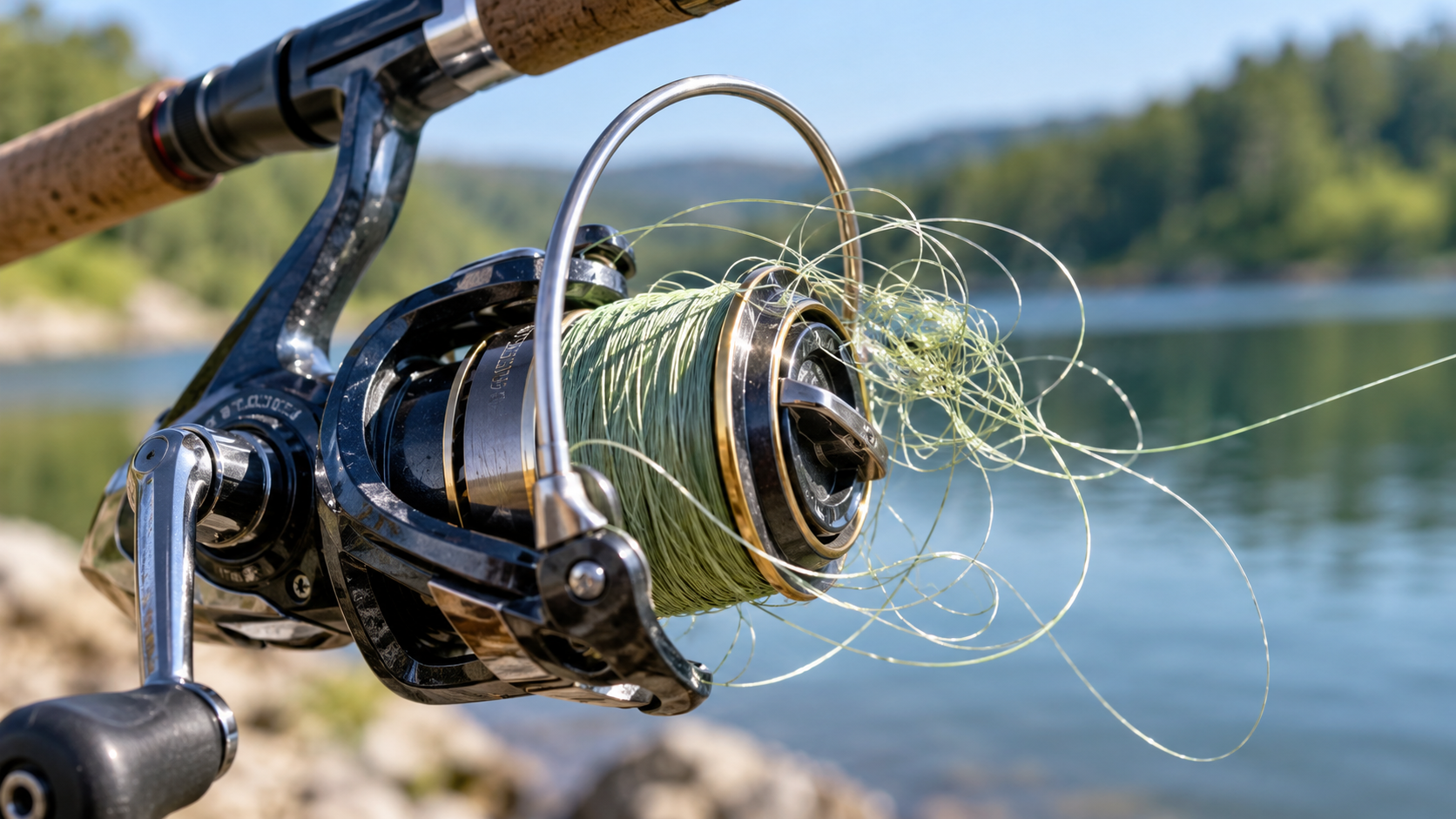
A knot halfway through a cast can make you want to strip the reel and start over. Before you throw away good braid, look at what happened just before that cast. A loose loop wound onto the spool can stay hidden until the next cast pulls it out with the surrounding line.
Start by checking for loose wraps, excess fill and line caught around the spool or rod tip. Then look for twist, uneven line lay or a leader connection that catches. Wind can make line harder to control, but a calm day does not rule out any of those problems.
Stop before the next cast
If you spot a loop sticking out of the line pack, do not reel over it or try to cast it clear. Secure or remove the lure, open the bail and draw line off gently until you reach the affected section. Keep the loose line contained so it cannot catch on your feet or blow into the water.
Work an open tangle apart without pulling it tight. If the knot has cinched down, or the line is visibly damaged, cut back to sound line. A hard yank can turn a loose tangle into a tight knot. Do not wrap braid around your fingers or use your teeth to pull it apart. Once the tangle is cleared, rewind the loose line under light, controlled tension before casting again.
Before tying back on, check that you still have enough working line for the fishing ahead. Repeatedly cutting out tangles can eventually bring the backing connection into your normal casting length.
Watch the first turns of the handle
Make one easy cast and pay attention to the line when the lure lands. Close the bail by hand, check that the line has settled into the roller and take up loose line under light, controlled tension. Keep your fingers clear of moving parts.
The useful habit is noticing the slack before you wind it onto the spool. Closing the bail manually gives you an opportunity to check; it cannot fix a loop you leave wrapped around the drag knob or underneath the spool.
Look again after working a lure on a slack line. If the outer wraps have become visibly loose, correct them before making a hard cast. Change one thing at a time so you can tell whether the problem returns.
Check the fill without guessing at yards
Look at the fullest part of the spool, not just the side that has a gap. Line heaped against the lip needs attention even if the rest looks low.
Follow the fill guidance for your reel. For context, Lew’s gives roughly 1/8 inch below the outer edge in its spinning-reel spooling guide, while Berkley describes 1/8 to 3/16 inch. Treat those as examples, not a reason to override a different spool’s instructions.
If the reel is overfilled, remove enough line to reach its intended level. Do not keep cutting arbitrary lengths every time a knot appears. If the line already sits correctly, another cause needs checking.
For a full reload, use How to Spool a Spinning Reel Correctly. That guide covers the backing and winding process; the aim here is to find the fault before repeating it.
Separate twist from a loose loop
A loose wrap and twisted line can occur together, but they need different attention. With the lure removed, let a short section hang slack and observe whether it repeatedly twists around itself. Large coils in mono or fluorocarbon can also reflect spool memory, so coils alone do not prove twist.
If twist appeared during a fresh spool-up, stop and check the line maker’s feeding method and your spooler’s spinning-reel instructions. If it developed while fishing, inspect the presentation too. A bait that rotates instead of running properly can keep introducing twist after you have corrected the spool.
A binding line roller can also contribute to twist. Follow the reel’s maintenance instructions or have it checked. A swivel may suit a rotating presentation, but it will not remove a loose loop already buried in the reel. Do not reel a swivel into the guides.
Check the leader connection and line lay
Notice whether the cast hesitates as the leader knot passes the guides. A bulky or poorly tied connection deserves attention before you change braid brands. Check the knot and tag ends against the knot’s instructions; trimming everything flush can create a different failure.
If the fishing allows a shorter leader, keeping the connection outside the tip during the cast removes that particular contact point. Keep the lure drop manageable and clear of people and obstacles. Use the braid leader guide to consider the leader’s job before shortening it.
Also look for a persistent cone of line at either end of the spool. That calls for a line-lay check, not simply more braid. Do not start removing washers without your reel’s instructions.
Once the visible problems are corrected, make several controlled casts and inspect the spool between them. If the same problem returns, note when it begins and what changed: the lure, leader, line or reel. That is much more useful than replacing everything at once.
